
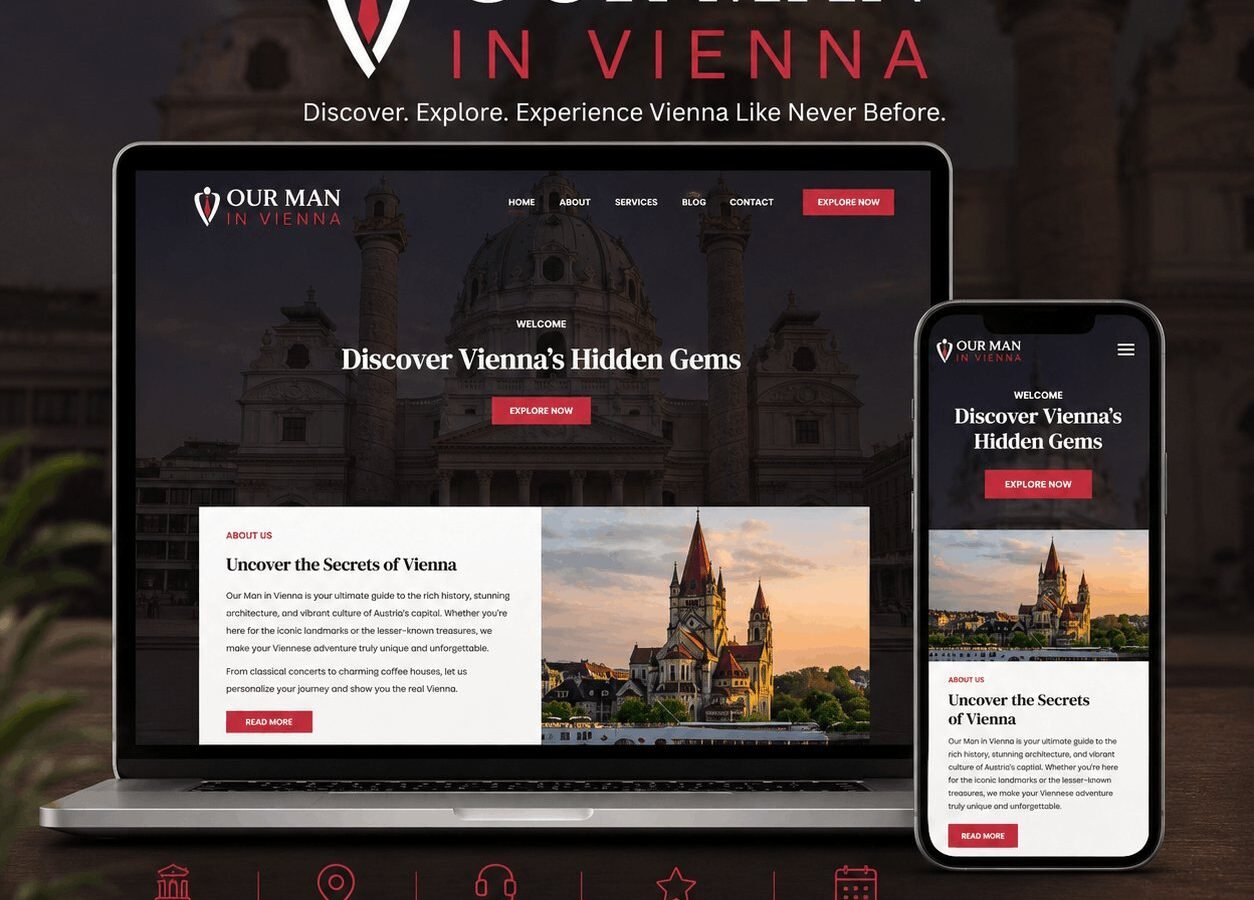
- ViennaCity guide
- BookingsPrimary action
- WordPressPlatform
The problem
A city guide competing on experience needed a site that felt like the city rather than a booking form.
What I did
- Website for a Vienna-based travel and city-experience guide|Full-bleed photography hero with a custom logo mark|About and services sections structured for storytelling and bookings|Explore Now CTA driving visitors toward services
The brief
A city guide to Vienna, aimed at visitors who want more than the standard three-day itinerary. The proposition is local knowledge, and the site has to make that credible to someone who has never met the author.
The problem with travel content
The category is saturated with content that reads as if it were assembled from other websites, because most of it was. A visitor who has read four Vienna guides recognises the fifth immediately: the same landmarks in the same order with the same adjectives.
The only defence is specificity. Content that names a particular coffee house and says why it is worth the walk cannot have been written by someone who has not been there. The site’s structure is built to reward that: entries are places and experiences with real detail attached rather than round-up lists that could describe any city.
Structure
Places, districts and itineraries as three connected content types. A visitor arriving from a search for a specific landmark lands on that place, and finds the district around it and the itineraries that include it. A visitor planning a trip starts from an itinerary and works down.
That cross-linking is what makes a guide site useful and what makes it rank. A page that stands alone is a dead end; a page that leads naturally to three related pages keeps a reader on the site and tells a search engine the site has depth on the subject.
Photography
Vienna is photogenic in a way that invites postcard imagery, and postcard imagery is exactly what undermines a claim to local knowledge. The photography leans towards how the city looks to someone who lives there: interiors, side streets, ordinary weather.
Seasonality
Travel content is seasonal in a way most content is not. A Christmas market entry is worthless in June and essential in November. Entries carry a season field, so the homepage can lead with what is relevant now without anything being rewritten.
The build
WordPress with places, districts and itineraries as custom types, each carrying location data, opening information and season. Maps render from that structured data rather than being embedded by hand on each page.
Performance
Travel research happens on phones, often abroad, frequently on roaming data. Images are aggressively optimised, maps load on interaction rather than on arrival, and the pages work fully without JavaScript.
What the client can manage
Places, districts, itineraries and seasonal features. Adding a place puts it on the map, into its district and into any itinerary that references it, without any of those being edited separately.
The stack
Next
More case studies
-
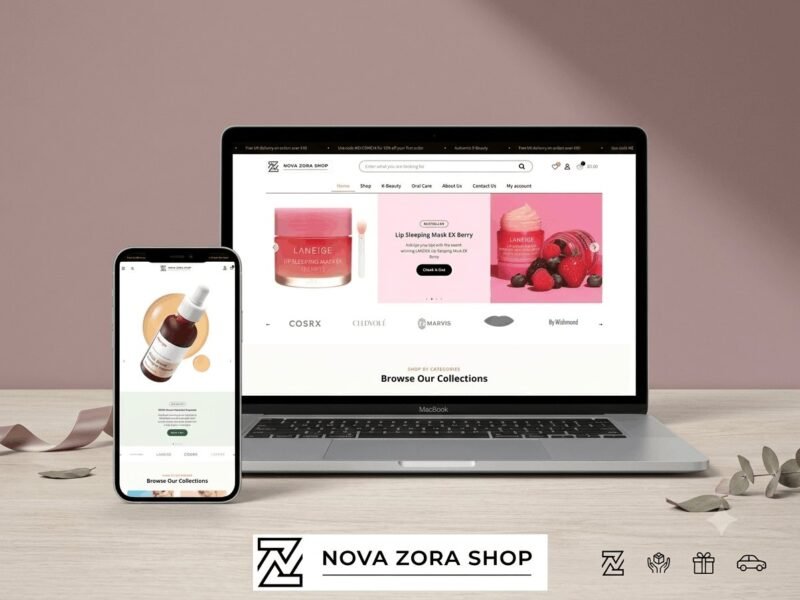
Nova Zora Shop
A WooCommerce store for authentic K-Beauty and skincare brands, built around category navigation and conversion.
-
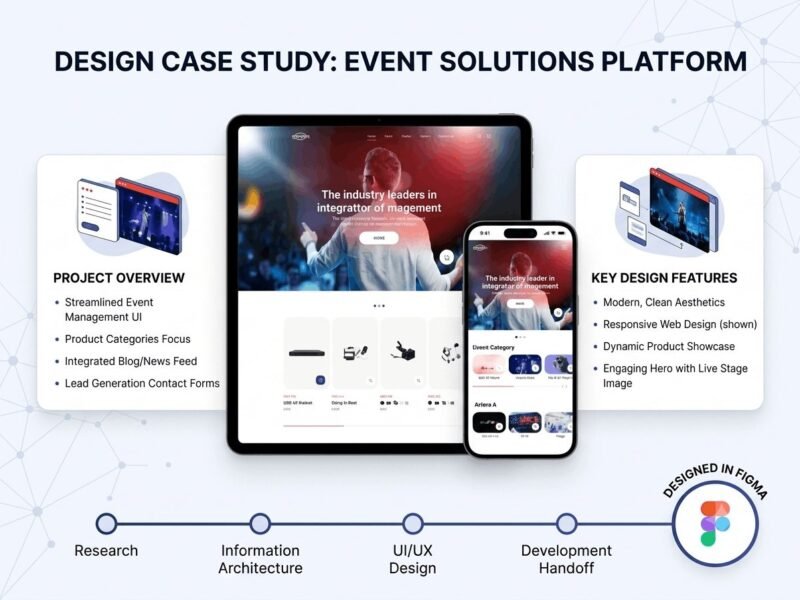
ABBN
A corporate site for a conference interpreting-equipment supplier, with a storefront and a full solutions site…
-
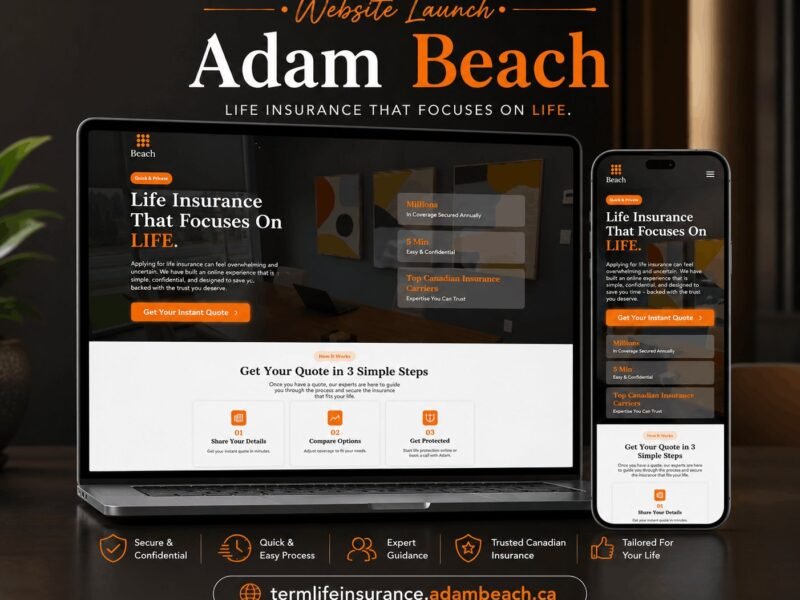
Adam Beach Term Life
A landing page for a Canadian term life insurance advisor, built around a three-step quote flow.
Ready to build something that performs?
Tell me about your project and I'll tell you exactly how I'd approach it. Free 30-minute consultation, and I reply within 24 hours.